Coffee Cup Outline Filled Icon: Graphics & Icons for Crafters
When I first opened the Coffee Cup Outline Filled Icon file, I had that immediate spark of recognition that every handmade seller knows well. It's the feeling that says this design will slot perfectly into a dozen different product ideas without needing heavy edits or reworks. The icon strikes a balance between clean minimalism and cozy warmth. The outline structure keeps it crisp and modern, while the filled detail gives it enough substance to stand out on a printed mug or a tote bag. It does not try too hard to be decorative, and that restraint is exactly what makes it useful for real crafting work.
For anyone running a small handmade business, an Etsy shop, or preparing for a craft fair, this kind of graphic design asset is the quiet workhorse that holds a product collection together. It is not the loudest element on the page, but it is the one that makes a design feel finished. The Coffee Cup Outline Filled Icon carries a cozy, approachable mood. It suggests a friendly coffee shop, a slow morning, or a thoughtful gift. Buyers who gravitate toward warm neutrals, minimalist home decor, or simple self-care themes will likely respond well to products featuring this icon.
First Look at the Coffee Cup Outline Filled Icon
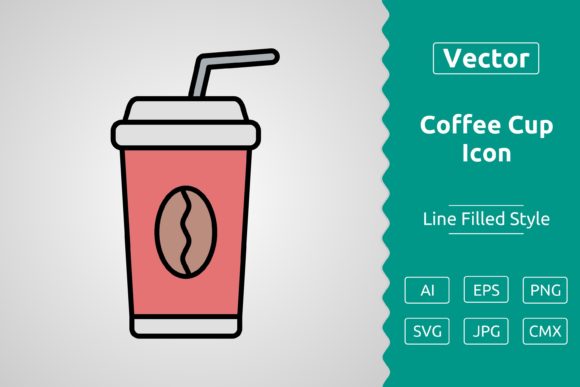
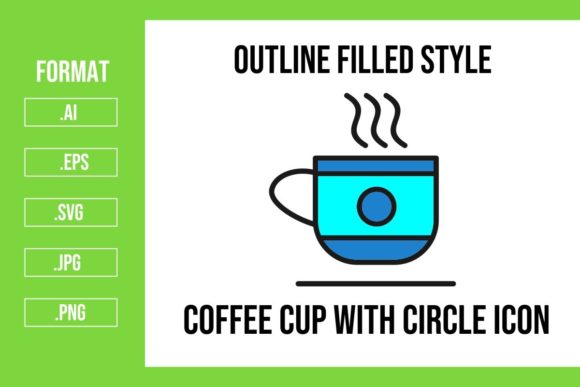
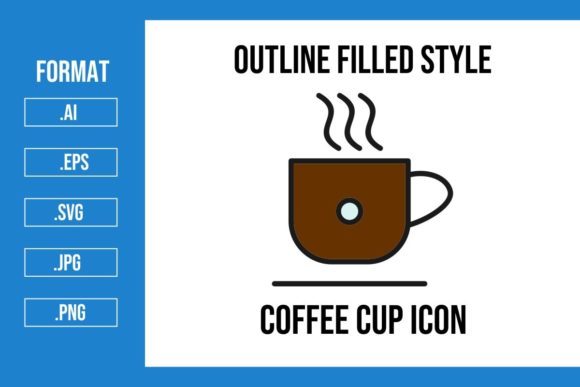
The shape reads instantly as a coffee cup, which matters more than many crafters realize. I have tested plenty of coffee-themed graphics where the silhouette became confusing at smaller sizes, especially on stickers or gift tags. With this icon, the handle, the rim, and the body of the cup hold their proportions well. The fill inside the outline adds just enough weight to make it usable on both light and dark backgrounds, which is a practical advantage when you are designing for printable products, sublimation projects, or vinyl cutting.
The design feels intentionally simple. It does not lean into rustic farmhouse territory, nor does it push toward overly playful cartoon styles. It sits somewhere in the middle, making it versatile. A coffee-themed greeting card, a set of planner stickers, a kitchen wall art print, or a thank-you insert for a handmade order could all use this icon without clashing with the overall aesthetic. That adaptability is valuable when you are building a cohesive product line and need design assets that can move across multiple product types without forcing a complete rebrand.
When a Simple Icon Saves a Handmade Collection
Let me paint a real scenario. I was putting together a small batch of coffee-themed products for a local market last season. The plan included sublimated mugs, a few cotton tote bags, matching gift tags, and a printable thank-you card design. I needed a graphic element that could tie the whole collection together without overwhelming the typography or the product shapes. The Coffee Cup Outline Filled Icon became that anchor. It appeared on the mug as a subtle accent, scaled up slightly on the tote bag as a focal point, and printed cleanly on the gift tags at a much smaller size.
This is where the real value of a well-built icon file becomes clear. When you are managing a handmade business, you do not have time to fight with poorly traced lines, broken SVG paths, or low-resolution PNG files that pixelate the moment you resize them. The source files for this icon, available in multiple formats, meant I could pull the SVG straight into Cricut Design Space for the tote bag vinyl, use the high-resolution PNG for the printable thank-you card, and keep the AI file for any future edits. That kind of format flexibility matters when you are working across cutting machines, sublimation printers, and digital product listings.
Where This Icon Shines in Real Crafting Workflows
After testing the Coffee Cup Outline Filled Icon across several projects, I found it works best in situations where clean, readable shapes are the priority. Here are the product types where I would confidently use this graphic design asset without hesitation.
- Sublimation mug designs — The filled outline holds up well under heat transfer, and the simple shape looks natural wrapped around a curved mug surface.
- Tote bag vinyl cuts — With a clean SVG file, the icon cuts smoothly on a Cricut or Silhouette machine. The outline is thick enough to weed easily without tearing.
- Printable greeting cards and gift tags — The icon prints sharply at multiple sizes, and the transparent PNG background integrates cleanly into card layouts.
- Planner stickers and label sheets — Scaled down to sticker size, the icon remains recognizable, making it suitable for coffee-themed planner kits or kitchen labels.
- Thank-you cards for handmade orders — A small coffee cup icon on a thank-you insert adds a personal touch without distracting from the message.
- Party favor tags and decorations — For coffee-themed gift baskets, bridal shower favors, or small business client gifts, the icon adds a polished finishing detail.
- Printable wall art — Paired with a simple typography layout, the icon can anchor a kitchen or coffee bar print that feels minimal and modern.
Each of these uses benefits from the icon's straightforward design language. It does not compete with other elements, so it works well as a supporting graphic in a larger composition. For handmade sellers who build product bundles, seasonal collections, or digital product listings, having a reliable icon like this in your design assets library saves time and keeps the finished products looking cohesive.
Pairing the Icon with Fonts and Layouts
One of the first things I test with any new graphic is how it behaves next to different font styles. The Coffee Cup Outline Filled Icon has enough simplicity to pair well with a wide range of typefaces. A clean sans serif font gives the whole layout a modern coffee shop feel. A soft script font pulls the design toward a more personal, handmade look. A serif font adds a touch of tradition, which works well for printed menus or kitchen decor. Even a playful handwritten font can work if the product is aimed at a younger, trendier buyer.
The icon's proportions also make it easy to center or offset in a composition. I have used it as a small accent next to a shop name, as a repeat pattern element on a tumbler wrap, and as a standalone focal point on a simple sticker sheet. In each case, the icon held its visual weight without needing extra decorative borders or flourishes. That restraint is a strength when you are designing for customers who prefer clean, uncluttered products.
Technical Checks Every Crafter Should Run
Before committing any graphic design asset to a customer order or a product batch, I always run through a practical checklist. The Coffee Cup Outline Filled Icon performed well in most areas, but here are the checks I recommend for anyone using this icon in a small handmade business.
- Open the SVG file and inspect the lines — Confirm there are no stray nodes, broken paths, or overlapping cuts that could confuse a Cricut or Silhouette machine.
- Check PNG transparency at actual size — Zoom in to see if the edges are clean. A transparent background is essential for layering on product mockups or printable designs.
- Confirm the resolution for sublimation — If you are printing at high heat, the image needs to hold sharpness at the final print size. A 300 DPI PNG is usually sufficient for most sublimation projects.
- Test colors before printing in bulk — The icon's filled areas may look different on screen than they do on a physical product. Print a sample on the actual material before committing to a full batch.
- Preview on both light and dark backgrounds — The filled outline helps with visibility on dark products, but test it on a black mug or a dark tote bag to confirm the contrast is still strong enough.
- Resize and test at small dimensions — If the icon will appear on a gift tag or a small sticker, scale it down and check that the cup shape and handle remain clear.
- Place it on a real product mockup — Seeing the icon on a digital mockup helps catch proportion issues before you cut or print anything.
These steps take a few extra minutes but they prevent the kind of costly mistakes that hurt small handmade businesses. A design that looks perfect on a computer screen can behave differently on a cutting mat or a sublimation blank, and the only way to know for sure is to test it in your specific workflow.
Where to Use This Icon with Extra Care
No graphic works perfectly in every situation, and the Coffee Cup Outline Filled Icon is no exception. There are a few scenarios where I would recommend caution or extra testing before adding it to a product lineup.
Very small cutting details can become tricky. The handle gap on the coffee cup, while proportional at normal sizes, could become a weeding challenge if the icon is cut too small in vinyl. If you are planning to use this icon on tiny stickers or very fine heat transfer vinyl cuts, test the weeding process first. The filled outline helps by keeping the shape thicker than a pure outline icon, but at extremely small sizes, any enclosed negative space can become a practical issue.
Layered vinyl projects also require attention. The icon works best as a single-color design. If you try to layer multiple colors by separating the outline and the fill, you may introduce alignment challenges that add time and complexity to production. For most handmade sellers, the single-color version will be the most practical and the most profitable use of this asset.
Crowded compositions are another area to watch. If the icon is placed in a design with many other elements, its simplicity could get lost. The icon performs best when it has breathing room, whether it is centered on a tote bag, placed as a standalone accent on a mug, or used as a small decorative mark on a gift tag. Give it space, and it will reward you with a clean, professional look.
Licensing, Commercial Use, and Handmade Business Considerations
Before using the Coffee Cup Outline Filled Icon for customer orders, Etsy listings, or craft fair products, confirm the commercial license terms. Most marketplaces that sell graphic design assets offer a standard license that covers physical product use, but always check whether the license extends to print-on-demand, digital product resale, or use in design bundles. If you plan to sell printable products that include this icon, make sure the license allows digital distribution of the final flattened design.
For handmade sellers building a small business, licensing clarity is not optional. A single licensing misunderstanding can lead to listing removals, customer complaints, or worse. Read the terms, keep a record of your purchase, and if the license is unclear, contact the seller before using the icon in a commercial product. The peace of mind is worth the extra step.
Is This Icon Worth Adding to a Crafter's Toolkit
After using the Coffee Cup Outline Filled Icon across multiple projects and testing it in real crafting scenarios, I can say it earns its place in a handmade business toolkit. It is not the flashiest design asset available, but it is the kind of graphic that gets used repeatedly because it fits so many different product types and styles. Coffee-themed products have consistent demand across Etsy, craft fairs, and small business branding, and having a reliable, well-formatted icon ready to go cuts down on design time and helps maintain a consistent product line.
For Cricut users, Silhouette crafters, sticker designers, sublimation creators, printable product makers, and small handmade business owners, this icon offers practical value. The clean SVG lines, the transparent PNG background, the multiple file formats, and the adaptable design style make it a solid addition to a working library of design assets. Whether you are preparing a seasonal coffee collection, designing a thank-you card for your shop, or building a small batch of gifts for a local market, the Coffee Cup Outline Filled Icon delivers what it promises without adding unnecessary complexity to your workflow.
In a creative marketplace flooded with overly intricate graphics that do not always translate well to physical products, a simple, well-executed icon like this one stands out precisely because it does less. It gives you a clean shape, a warm mood, and a format that works across cutting machines, printers, and digital platforms. That combination of usefulness and simplicity is exactly what experienced crafters look for when adding new design assets to their collection.